We deserve better leadership. Vote Biden on November 3rd. https://www.npr.org/2017/03/17/520435073/trump-embraces-one-of-russias-favorite-propaganda-tactics-whataboutism https://newsroom.churchofjesuschrist.org/article/first-presidency-letter-united-states-election-2020 https://www.churchofjesuschrist.org/general-conference https://www.newsweek.com/fox-news-host-confronts-trump-adviser-over-flouting-mask-rules-debate-1536265 https://www.whitehouse.gov/about-the-white-house/the-constitution/ https://www.fbi.gov/news/speeches/the-threat-posed-by-the-chinese-government-and-the-chinese-communist-party-to-the-economic-and-national-security-of-the-united-states https://www.psychologytoday.com/us/blog/here-there-and-everywhere/201701/11-warning-signs-gaslighting https://en.wikiquote.org/wiki/Ratatouille#Anton_Ego https://joebiden.com/
Tuesday, October 13, 2020


Thursday, June 5, 2014
One year later: Snowden & the NSA leaks
 Working for a company that produces an information security product, I always assumed the United States conducted some level of surveillance and spying going on the internet. Nevertheless, PRISM still felt like a slap in the face. Assuming the government has betrayed you is one thing, seeing documents showing how they're doing it is something else. My previous office worked on information fusion, and the state-of-the-art there pretty much stunk. I naively hoped that applied universally, but that appears incorrect. I understand why the NSA wants to collect all this information, but I also understand the Fourth Amendment.
Writing this post has been on my todo list for a few months now, the anniversary of the leaks being a convenient forcing function. In another month comes another significant anniversary: the 4th of July. Have you considered what sort of effect NSA-like surveillance would have had on the American Revolution? We now put the Founding Fathers on pedestals and consider them inspired men, but at the time they were traitors to England. Although we may romanticize the origins of our nation to some extent, I feel it reasonable to assume that a surveillance state would have squashed it. Look at how China has handled Tiananmen Square, and that was 25 years ago.
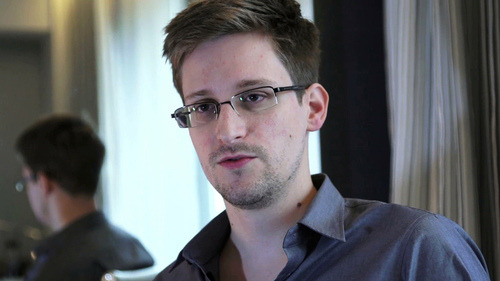
 Our environments have an effect on us. I know that my environment has an effect on me. The longer I work in information security, the more paranoid I get. That paranoia doesn't get mitigated any by my favorite TV show: Person of Interest. One of my favorite authors, Daniel Suarez, consistently discusses government misuse of technology and abusing civil liberties in his novels. He writes science fiction, but in many ways the ideas hit too close to home. Some of my thoughts on Snowden and his leaks may come from my overfed imagination, but I do not think I arrive too far from the truth.
What would you do in Snowden's shoes? In his recent NBC interview he claims to have raised the issues internally, although the NSA denies this. Have you ever worked anywhere that your ideas would get patiently listened to and then the only response would be a nice pat on the head? Can you see that being the case at the NSA, a government organization? If he tried to raise the issue internally (like I suspect many have), he obviously did not get enough response. If he did not raise the issue internally, perhaps he though he might get "disappeared" to Gitmo. Maybe he thought he might get droned. The post-9/11 rules for how the government treats those it does not like seem very undefined. The Patriot Act, Obama's inaction, and his own experience as a government contractor had cost him his faith in the system.
 Snowden still saw a problem that needed resolving. He could not resolve it through traditional channels out of bureaucracy or fear, so it needed to come as a leak. Here's the problem: the American public has a very short attention span. Six months before the Snowden leaks started, the nation cried out for more gun control after the Sandy Hook shooting. Sadly, two months later and nobody said anything more about it. A single release of information or short event have a similar affect. "We the people" would rattle our sabers for a couple months but then the government could go back to business as usual. Snowden needed a sustained campaign that would last through one or more election cycles.
 However brilliant of a programmer or high-minded of a citizen, Snowden didn't have the pulpit from which to preach his gospel. He needed a bulldog in his corner that felt as strongly about the issue as he did and would doggedly pursue the story. It had to stay in the limelight. It had to keep making headlines. It had to hurt politicians, so they would vote for change. It had to hurt NSA recruiting, so they would need to clean up their act. It had to cut across party lines, so nobody could just point fingers. I do not follow journalists, except for maybe a few tech ones, but apparently Glenn Greenwald fit the description. Snowden had to pursue him for months and educate him on secure communication.
One objection to Snowden's behavior during the first couple of weeks consisted of his somewhat strange escape route. To complain about NSA surveillance and then go to a country that obviously had it significantly worse seemed hypocritical. To go from there to KGB-led Russia made little sense as well. His interview throwing softball questions to Putin did not help. I do not have all the answers here, but I know that if I really wanted and expected change, I needed to stay in a place where I could act. That meant Snowden had to stay out of range of United States authorities. A safe bet that our two biggest frenemies could keep him out of jail, provided he applied a little leverage. Maybe that leverage consisted of not airing their dirty laundry, or sharing one or two country-specific NSA secrets. I admit the evasion route still has questionable parts, but it at least seems feasible.
 Then comes the discussion of why he did not just surrender himself to the justice system, or why he does not do so now. The justice system, like every other branch of our government, is warped to the point of serious breakage. Consider the Patriot Act and the Computer Fraud and Abuse Act. Not the actual laws, but how cases have gone in the courts regarding those. For the Patriot Act, see our friends in Gitmo. Also consider Ladar Levison, the owner and operator of Lavabit. His farce of a what one might call a court case has cost him his company. The Computer Fraud and Abuse Act yielded a vicious attack on Aaron Swartz. Aaron's feeling of helplessness in his situation eventual drove him to end his life, five months before the Snowden leaks. The point being that our judicial system does not have a track record of doing things fairly or coming to logical conclusions.
Thank you for reading through my thoughts on Snowden & the NSA leaks. I still do not obsess about it, but felt the anniversary deserved more than a passing note. I think Snowden did something incredibly brave and that history books will describe him as a hero. In our fear after 9/11, the pendulum of freedom vs. security swung dramatically toward security. It's time it swung back to freedom.

DISCLAIMER: This post reflects my views and opinions only. Any comments made on this website, by myself or by third parties, do not necessarily reflect views or opinions of my employer, religion, family, or any other organization to which I belong.
Monday, October 21, 2013

Tuesday, July 23, 2013
Person of Interest: Now a documentary!
I wrote a blog posts at the ends of season one and two talking about how the show's world melded with our current reality and what we could learn from that.
Thursday, July 11, 2013
Managing Security Tradeoffs between Private and Public Information

New Bit9 blog post: Managing Security Tradeoffs between Private and Public Information.
It talks about this graph I've been thinking about:

You can read all my Bit9 blog posts here.
Monday, March 25, 2013
Climate change survey
Thursday, August 30, 2012
3 Lessons from a Breach, a War Game, and a Password Corpus

Friday, August 24, 2012
Romney's faith and my vote
I'll start with the original comment. My colleagues from the University of Utah immediately pointed out how much of a leap I had made, and I admitted that fairly quickly. My main concern was that this represented a oblique line of attack going forward. It appears that the concern was misguided. More significantly, it appears that the Romney campaign is using the "belief" heavily in its campaign. If Romney wants to "believe in America," I think it's fair for Obama to talk about Romney's core beliefs as they relate to America. There is still some nuance there, but I expect the official rhetoric to stay clean on the aspects of religious beliefs.
That lead's to the question of what significance a candidate's religion should play in a political race. Does it matter what Obama's preacher teaches from the pulpit? What does it mean that Romney is a Mormon? I think that the answer to both of those questions depends on an individual's religious convictions. How I feel about it may not be the way others feel about it, and it definitely doesn't necessarily represent the way people "should" feel about it. Below I'll discuss my thoughts.

Wednesday, November 30, 2011
The Tea Potty

Please take a moment to vote the shirt up!
Monday, May 30, 2011
Palin attacks
Although it is obviously a conglomeration of several headlines, it brought a little smile to my face. We may never know why the family in Joplin rejoiced that Palin attacked DC on a bike.Palin Rides into DC on a Motorcycle
ABC News - 1 hour ago
The former Alaska governor kicks off her tour on a bike, not in a bus. Investigators are unsure what caused the animal to attack. A happy ending for one family in Joplin, Missouri.
Here's the screenshot:

Wednesday, January 5, 2011
Lazy post
Friday, December 17, 2010
Philosophies of men
This past week one of them emailed me a ridiculous powerpoint presentation. I read a good portion of it and skimmed through the rest. It consisted of pictures of political, historical, and LDS figures and quotes they made. It basically talked about how there are Gadianton robbers in our day and that we need to fight them. I'll get back to my thoughts on this later, but I responded to my friend by saying "That's pretty special" and questioning the emphasis on politics in the Book of Mormon. He caught my sarcasm and responded with some more content I will talk about later. I told him I would explain myself a bit more. This blog post is that explanation. It will not be concise. It will not be short.
I took the required History of Civilization course at BYU from the Political Science department. I had Dr. Matthew Holland for my instructor (son of Elder Jeffrey R. Holland and current president of UVU). I should mention here that this entire post is my personal opinion and is in no way endorsed or acknowledged by Dr. Holland, the LDS church, or anybody other than myself. In his class, Dr. Holland had one lecture where he tied what we had been studying that semester (Plato, Socrates, Machiavelli, etc.) to LDS theology. I found it extremely interesting to see all the parallels in the scriptures to Plato's Forms. He also said that during the semester we had learned about "the philosophies of men." He continued to state that although that phrase has a negative connotation in LDS theology, there are many good, important, and true things to learn from those philosophies.
The one idea from Dr Holland's lecture that I want to highlight comes from the story of Shadrach, Meshach, and Abed-nego (Daniel 3). At this point in their history, Jerusalem has been sacked by the Babylonians and what then remained of the Lord's covenant people carried off into captivity. The Babylonian king took some of the young Israelite men to serve in his court. I will note for the overall point of this blog post that they actually served these captor-kings. In the story of Shadrach, Meshach, and Abed-nego, they refuse to worship a golden image, so the king gets mad and is ready to throw them into a furnace. Dr. Holland's point is in how they respond in verses 16-18:
16 Shadrach, Meshach, and Abed-nego, answered and said to the king, O Nebuchadnezzar, we are not careful to answer thee in this matter.The point is to trust in God's will and acknowledge He is in control. These three men did not know if they would be saved, but they did know that God had the power to save them if it was His will. They also knew that God was in control of their nation, including putting them under the control of king Nebuchadnezzar.
17 If it be so, our God whom we serve is able to deliver us from the burning fiery furnace, and he will deliver us out of thine hand, O king.
18 But if not, be it known unto thee, O king, that we will not serve thy gods, nor worship the golden image which thou hast set up.
There is a counterpoint to this. LDS theology teaches that We believe in being subject to kings, presidents, rulers, and magistrates, in obeying, honoring, and sustaining the law. However, we also believe the men of the American Revolution were inspired by God. There are times in LDS history when, living on the western frontier, Mormons showed some of that revolutionary spirit and frontier justice. There is an interesting and delicate balance to walk there (if any of you are deciding to start a revolution sometime soon).
Remember that the Jews of Christ's time were manipulated by the Sanhedrin into demanding His crucifixion because they were expecting a political savior instead of a spiritual savior. Even in the face of the farce that was His so-called trial, Christ recognized the authority of the high priest. Then there is the explicit example of Christ's teaching on taxes:
19 ¶And the chief priests and the scribes the same hour sought to lay hands on him; and they feared the people: for they perceived that he had spoken this parable against them.Paul shows similar behavior to Christ in his interaction with the high priest (although with a bit less self control): "Thou shalt not speak evil of the ruler of thy people." Peter speaks along the same lines, putting those who despise government as the unjust who will be punished. A handful of references is not concrete evidence, but I feel that it is enough to show that the question cannot be settled by latching on to certain quotes or scriptures.
20 And they watched him, and sent forth spies, which should feign themselves just men, that they might take hold of his words, that so they might deliver him unto the power and authority of the governor.
21 And they asked him, saying, Master, we know that thou sayest and teachest rightly, neither acceptest thou the person of any, but teachest the way of God truly:
22 Is it lawful for us to give tribute unto Cæsar, or no?
23 But he perceived their craftiness, and said unto them, Why tempt ye me?
24 Shew me a penny. Whose image and superscription hath it? They answered and said, Cæsar’s.
25 And he said unto them, Render therefore unto Cæsar the things which be Cæsar’s, and unto God the things which be God’s.
While we are wresting the scriptures, let us consider the most political chapter of the Book of Mormon: Mosiah 29. In that chapter, Mosiah sets up laws to transition his kingdom into a republic. On my mission, I had a very strange district meeting where some rebellious missionaries used verse 29 to attack their district leader. My response to that argument is to look at all the wars which occur from that point until the end of the book: they are all started by men of high birth or lesser judges looking for power. It is also unclear from this chapter how they implemented the "voice of the people." It is nice to think that is a democracy, but how does that work in such a large kingdom? No TVs, no radio, no cars, no trains. I think it must have been more of a republic with elected officials called upon to represent the voice of the people. Kind of like the United States Constitution originally sets up our leaders to not be dumb products of a popularity contest. Moving on.
The biggest problem I had with the powerpoint presentation my friend sent was that it didn't have any quotes from President Hinckley. The presentation was put together in 2007, so the living prophet at the time would have been President Hinckley. Why is this important? Well let's go to last October's General Conference and review Elder Costa's talk and Elder Duncan's talk. They both review President Benson's 14 fundamentals in following the prophet, and I would like to highlight the third one: "The living prophet is more important to us than a dead prophet." While I am pointing out conference talks, I should mention that Elder Cook's talk from this past conference and Elder Oak's talk from a year ago both provide good guidance on theology and politics.
All this most recent discussion started because I tweeted my support of the DREAM act. The DREAM act looks to be voted on in the senate tomorrow (Saturday). It will probably fail due to the racism and fear-mongering in the country and the spineless politicians in congress. One of my friends is a loyal follower of Glenn Beck. I was first exposed to Mr. Beck in 2007, when my Elders Quorum presidency counselor and I were driving back from service cleaning church trucks in Salt Lake. He turned on Beck's radio program and talked about how awesome it was. I had a hard time keeping a straight face with what I was hearing. He and Palin are the face of the TEA party? When the TEA party first started I thought they had some good points. Now I think they are mostly a bunch of nutters. Their leaders and pundits use an annoying and disingenuous strategy of inserting gross falsehoods in with a bunch of truths, and then repeating that over and over again. Exposed to something enough, anybody believes.
Even the philosophies of men, mingled with scripture.
Thursday, November 4, 2010
My Political Views
Here is the first time I took the first test, right after his original post.
I am a center-right moderate social authoritarian
Right: 2.66, Authoritarian: 1.77

Political Spectrum Quiz
I thought I was a bit timid about my answers the first time, so I took it again and got this:
I am a right moderate social authoritarian
Right: 4.26, Authoritarian: 2.14

Political Spectrum Quiz
Here's another test. I know, really exciting.
Economic Left/Right: 2.25
Social Libertarian/Authoritarian: 0.41

The Political Compass
So that's that.
Tuesday, November 2, 2010
Stop reading this blog!

- Stop reading this blog.
- Go outside.
- Travel to your polling location.
- Vote.
- . . .
- Profit.
After you have voted, take a minute to make sure you are fully subscribed to this blog. Go over to the Followers widget and follow the blog. Also subscribe to the post feed, the comment feed, and the page feed. It's a little more difficult than voting, not as satisfying, and not as important. It will make me happy, though.
If you do one thing today, go vote. If you do two things today, vote and subscribe to my blog.
I still love that trailer, even though I've never seen the movie. See what you might miss if you don't subscribe to my blog?
Wednesday, October 27, 2010
Vilifying
 I have recently been thinking about vilifying. I tend to view things as either black or white. Not a lot of grey, if any. This is not to say that I am always correct in my associations. I'm not. I am ashamed to admit that I sometimes take a while to shift my position when it is incorrect, but I do feel like I shift when I discover what I thought was white is black or vice-versa. I just mention this so you know a little bit of where I am coming from and why it might be to question the accuracy of the villain label.
Villains are great in fiction. They act as the antagonist and give the protagonist (often a hero) someone to measure up against. In a created universe it is easy to paint a villain as either one-dimensionally bad or maybe just seriously misguided. I think that we are too quick to apply the label of villain in the real world. There may be some who actually deserve it, but I feel like almost all groups make villains in order to either have antagonists or scapegoats.
I really started to think about this a while back when I was looking for LDS films on Netflix. Eventually I found States of Grace
 . A more familiar description of it to most mormons would be God's Army 2. Richard Dutcher, the director, pioneered modern LDS commercial cinema. I have not yet seen States of Grace, but I found the first film thought provoking and fairly well done. It was definitely hyperbole, but that's Hollywood.
I was a little shocked to discover he had left the LDS church a few years back (letter announcing his departure, second follow-up letter, interview at the beginning of this month). Like God's Army, a lot of what he said stoked my brain. In particular I enjoyed his apology of Thomas Marsh from the second follow-up letter. Thomas Marsh really is reduced to a one-liner Sunday School lesson. There has to be more depth. He was the chief apostle, after all. A similar apostolic example is that of Judas. Do you think Jesus would pick him just so he would be in a position to fail? That is not very charitable. I think Judas must have been a valiant disciple and good apostle, at least at the start. I have heard that Jesus Christ Superstar
 deals with this theme more, but I have never seen or heard it (but I did wiki it).
Continuing on the mormon theme, what happens when we apply this line of questioning to characters in the Book of Mormon? While I think the order of Nehor, the King-men, and the Gadianton Robbers, are difficult to justify, the Lamanites are often painted negatively. Especially in the beginning of the book. There are times, when this depiction is obviously unjustified. Jacob calls the Nephites out by pointing to the fidelity of the Lamanite husbands. The sons of King Mosiah lead an extremely successful missionary effort about midway through Nephite history. Numerous dissenting Nephite groups are accepted and embraced into Lamanite culture. I propose that the issue is all are about how the Nephites looked at their Lamanite brothers. Nobody likes being viewed as ignorant villains.
One of my favorite scenes from The Lord of the Rings: The Two Towers

 (the movie) is when Faramir turns over the fallen Southron and says:
The enemy? His sense of duty was no less than yours, I deem. You wonder what his name is, where he comes from, and if he really was evil at heart. What lies or threats led him on this long march from home, and would he not rather have stayed there... in peace? War will make corpses of us all.In other words, he ponders if the Southron is really a villain, or if maybe the Southron even viewed the men of Gondor as the villains.
The last aspect I want to touch on is that of politics. The modern political scene in America is a horrible example of vilification. Each side of the aisle tries to make the other look like the bigger villains, while neither seems to care about actually making progress. Television ads, news stories, campaign debates, and strategists/pundits all focus on talking points and slander instead of the actual issues. People are fed up with this behavior in Washington, with the unfortunate result of a bunch of crazies (the TEA party) gaining a foothold. See! Even I can't help it. I made them into the villains.
I'll end with a clip from this past Monday's Daily Show about the firing of Juan Williams:
| The Daily Show With Jon Stewart | Mon - Thurs 11p / 10c | |||
| NPR Staffing Decision 2010 | ||||
| ||||
Wednesday, September 22, 2010
American Evita

|

|
| Eva Peron | Sarah Palin |
|---|
The GOP just released a so-called "Pledge to America," which is really a pathetic attempt to keep the Tea Party from splitting the vote. Neither the GOP nor the DNC leadership seems to really get it, and most of the Tea Party spews forth more hateful vitriol than Smaug.
There is apparently a scandal from the White House that some of Obama's senior policy-makers and top generals do not agree with him. I can see how that can be spun as a negative, but think about it intelligently for a minute: do we really want our Chief Executive Officer surrounded by yes-men? How could a few people willing to stand up for what they believe in be a bad thing?
Of course, I am putting my own spin on things. It is hard not to. It seems like nobody cares about what is right anymore, only what is good. Good is subjective, right is fact. Do you seek out what is right, or only what is good?
Sunday, September 19, 2010
Bill Clinton making sense
| The Daily Show With Jon Stewart | Mon - Thurs 11p / 10c | |||
| Exclusive - Bill Clinton Extended Interview Pt. 2 | ||||
| ||||
Wednesday, February 3, 2010
Pundit-speak
Here is the original post:
I am sincerely thankful for...MODERATE DEMOCRATS!! Thanks to the moderate Democrats who stopped radical healthcare reform in 2009! Without them - the radical progressive socialists would have jammed a government takeover bill down our throats.I read the start and thought my friend had just had a little too much Glenn Beck sauce. He's a big fan. I sincerely think people must be smarter than the raw rhetoric. Here is the response I posted on Facebook:Because the Republicans could have all picked up and left town completely and healthcare STILL could have passed if the Democrats all agreed on the bill - you can see that the Republicans had NOTHING to do with stopping this bill.
This radical legislation and others were stopped because of the fight between good, traditional Democrats who share the values of most of this country who put up a fight against the radical extremists led by Pelosi, Obama, Reid, Frank, Franken, Markey, etc.
And so, our moderate Democrat friends - we salute you! And we say - Thank You for taking part in saving our Republic.
And now that we have a little power back - let us be grateful and work hard to rid our nation's capital of ANY and ALL players on BOTH SIDES of the isle who are not honest brokers and do not have the interests of our nation at heart.
And how can you tell who they are? If they voted to help spend us into bankruptcy - then they are not honest brokers. If they willingly helped advance the cause of the Progressives towards the economic collapse of our nation in order to "reset" it their way - without that pesky constitution - then they are either ignorant or complicit. And it's time to relieve them of their duty and send honest brokers to congress.
2010. The year of the 2nd Revolution of the United States of America begins now!
And to Democrats, Independents, Constitutionalists, Libertarians and any other freedom loving citizens of this great nation - I salute you and say.....Congratulations...and buckle your seatbelts because we've only just begun the process of taking our country back!
I think things got out of hand and needed to die, but "Republicans had NOTHING to do with stopping this bill?" Who can seriously believe that? Maybe if we had actually worked together we could make some progress.In retrospect, I probably should not have responded at all. I normally ignore things like this for various reasons. However, I respect my friend and wanted to call him on the phony logic/rhetoric.
He responded with more of the same:
@Nathan Ummm. The Republicans could have simply not voted, walked out and gone home and nothing would have changed. They were not invited to any meetings. They were shut out of debates and told to go home. Not that they're any good any way - but they had NOTHING to do with this. WE THE PEOPLE put the pressure on the moderate Democrats who feared for their jobs. That's it.Depending on your political leanings, you may have different reactions to this interchange. My reaction the response was initially a "you have got to be kidding me," but has since changed to an interesting thought exercise in privacy. I think people only say the rhetoric in public in order to put on a good face. However, since there is no privacy any more the rhetoric never comes down. Instead everyone speaks in hyperbole and sound bytes, even among friends and family. It makes for horribly politics, governance, and discourse. However, in my friend's case, it did make some somewhat amusing YouTube videos.If we had HONEST brokers who were not intent on doing things to INTENTIONALLY destroy our country - then we could make progress. But that is not the case. Washington has been infected by a cancer known as Progressivism. It's in BOTH parties. (Lindsay Graham, John McCain, George Bush, Pelosi, Reed) Until this cancer and the above the law, power-gaining secret combinations are abolished there will be no good progress.